Clevera vs Storylane: AI video demos vs interactive tours (2026)

Storylane and Clevera are both positioned as "product demo" tools, but the experience of using each and the output they produce are significantly different. This comparison cuts through the surface-level overlap and explains exactly what each tool does, what it doesn't do, and which use case each is actually built for.
The fundamental difference
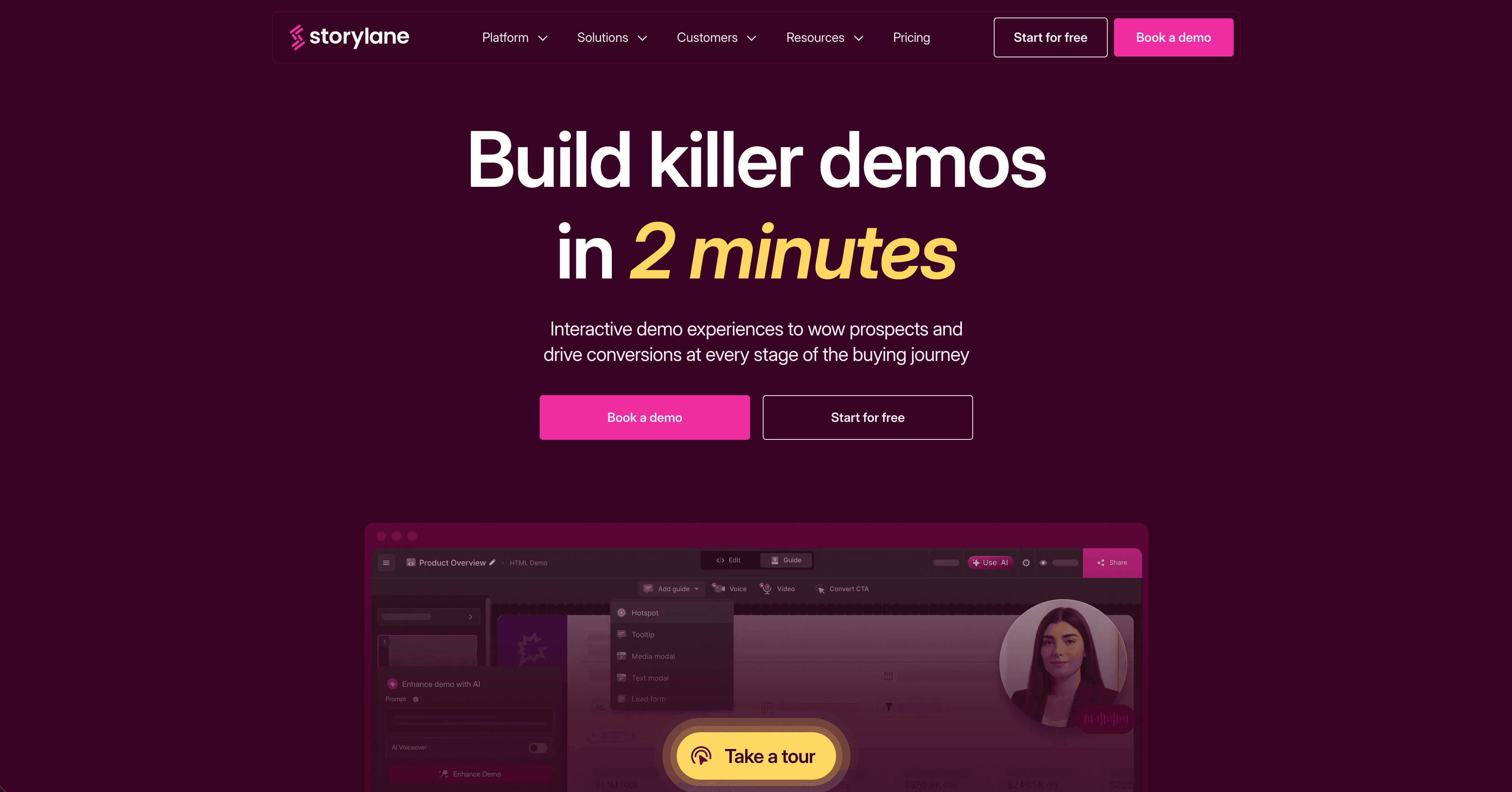
Storylane builds interactive HTML demos — guided, clickable experiences that prospects or customers navigate themselves. You capture your product screens, build the tour, write the step-by-step copy, and publish a demo that lives on a website, in a sales email, or as part of a PLG onboarding flow. It's a well-built product for that job.
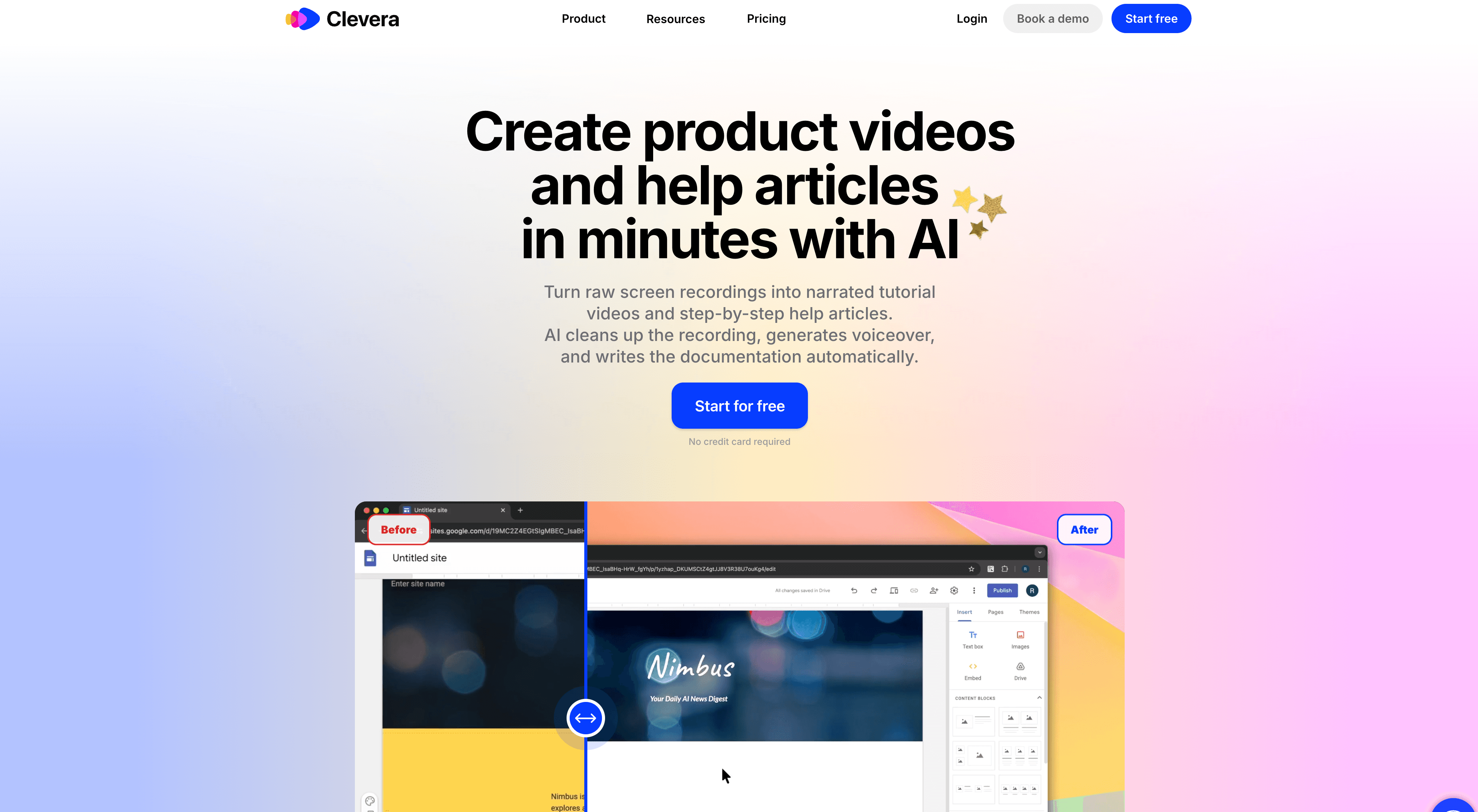
Clevera generates narrated video tutorials and written how-to articles from screen recordings. You record your screen (with no narration required), and Clevera's AI produces a fully narrated video and a structured article — script, voiceover, step titles, descriptions, and screenshots all handled by the AI. The output is a finished piece of content, not a demo framework you fill in.
The practical consequence: Storylane gives you a publishing platform and expects you to build the content. Clevera gives you finished content automatically.
Content production: the clearest difference
Storylane's Growth plan ($500/month) is where the full interactive demo experience lives. You get HTML demos, AI voiceover to add narration to your tours, and lead analytics. The AI voiceover is useful — it removes the need to record your voice — but the underlying demo structure, all the tooltip copy, flow labels, and step descriptions, are still yours to write.
Clevera's AI generates everything from what it observes on screen. A silent recording of a workflow produces a contextually rich narration script — not just "click the Export button" but "click Export to publish the video as a live embed, so any future edits you make will appear automatically in every location it's been shared." The AI understands what the action accomplishes, not just what it is.
For teams whose bottleneck is content production — not tool capability — that difference is significant.
Feature comparison
Feature | Clevera | Storylane |
|---|---|---|
Output format | Narrated video + written article | Interactive HTML and screenshot demos |
Content generation | AI writes script from silent recording | Manual — tooltip copy and flow labels are yours |
AI voiceover | Yes — from AI-generated script | Yes — on Growth plan ($500/month) |
Written how-to article | Yes — auto-generated | No |
Interactive user navigation | No | Yes |
Live video embeds | Yes (LiveSync — update without re-exporting) | No |
Lead analytics | Basic | Strong — tracks prospect engagement per demo |
CRM integration | Limited | Yes — HubSpot, Salesforce |
Publishing to help platforms | Notion, Confluence, Zendesk, Intercom, GitHub, etc. | Limited |
Translation | 74 languages (video + article) | Limited |
Pricing (entry) | $29/month (annual) | $40/month (screenshot only); $500/month (HTML) |
Where Storylane wins
Storylane's strength is in the sales and marketing funnel. An HTML interactive demo gives prospects the experience of navigating your product — clicking through actual UI, triggering flows, feeling the product before they've signed up. That's a different kind of engagement from watching a narrated video, and for PLG products or complex enterprise software, it genuinely influences buying decisions.
Storylane's lead analytics add commercial value too. You can see which features prospects explored, how long they spent in specific areas, and trigger sales workflows based on high-intent demo engagement. For GTM teams that treat demos as pipeline intelligence, this matters.
The RepX sales agent layer is also genuinely distinctive — turning your website into an AI-powered sales agent trained on your product documentation.
Where Clevera wins
Clevera wins on the content creation side of the equation — volume, velocity, and depth.
A product team documenting 50 workflows faces a choice with Storylane: write and assemble 50 demos manually, one tooltip at a time. With Clevera, they record 50 workflows silently and get 50 narrated videos and 50 how-to articles in a fraction of the time.
For customer success teams building onboarding flows, support teams maintaining a help center, and product teams creating training content for feature releases — Clevera's automation removes the content bottleneck. Storylane's model doesn't.
LiveSync also deserves a mention for teams maintaining content over time. When you update a Clevera video (new narration, adjusted visual, updated step), the change appears instantly in every embed. No re-exporting, no replacing links in your help center. For teams whose product ships frequently, that matters.
Pricing reality
Clevera starts at $29/month (annual). The full feature set is accessible from entry-level plans.
Storylane's free and Starter plans ($40/month) are limited to screenshot-based demos. The HTML demo capability that makes the platform compelling starts at $500/month. For most SaaS teams, the first meaningful pricing decision with Storylane is $500/month vs nothing.
That gap matters for teams deciding where to invest.
When to use Clevera
You need narrated video tutorials and written articles, not interactive tours
You want the AI to generate all the content, not just convert a script you wrote
Your primary use case is onboarding, training, or help center documentation
You need content in many languages
LiveSync (update videos without re-exporting) is important to your workflow
When to use Storylane
You need interactive HTML demos for a PLG flow or sales-cycle leave-behind
Prospect-level demo analytics and CRM integration matter to your GTM motion
Your team has content resources to build and maintain the demo library
You want prospects to navigate the product themselves, not watch a video
The honest answer
For teams with a clear sales-motion use case and budget for the Growth plan, Storylane is a strong platform. For teams that need help center content, onboarding videos, training tutorials, and documentation at scale without dedicated content production resources, Clevera eliminates more of the work.
Many teams run both — Clevera for documentation and onboarding content, Storylane or another interactive demo tool for marketing and sales pages. The decision between them isn't really about which is better. It's about which half of the problem you're trying to solve.

