Best Guru alternatives for team knowledge management (2026)

Guru is a team knowledge management platform built around AI-powered search. Cards — short, structured knowledge snippets — are created by team members, tagged by topic, and surfaced contextually inside Slack, email, and CRMs when users need them. For sales and CS teams that need quick access to internal knowledge while working in other tools, the browser extension and integration layer are genuinely useful.
Pricing is $25/seat/month with a 10-seat minimum, which puts entry at $250/month (billed annually). The Self-Serve tier covers most use cases; Enterprise is custom-quoted.
Teams look for Guru alternatives when the per-seat model doesn't match their usage patterns, when they need richer media (video, step-by-step tutorials) rather than text cards, or when the bottleneck is creating content at scale rather than organizing what already exists.
1. Clevera
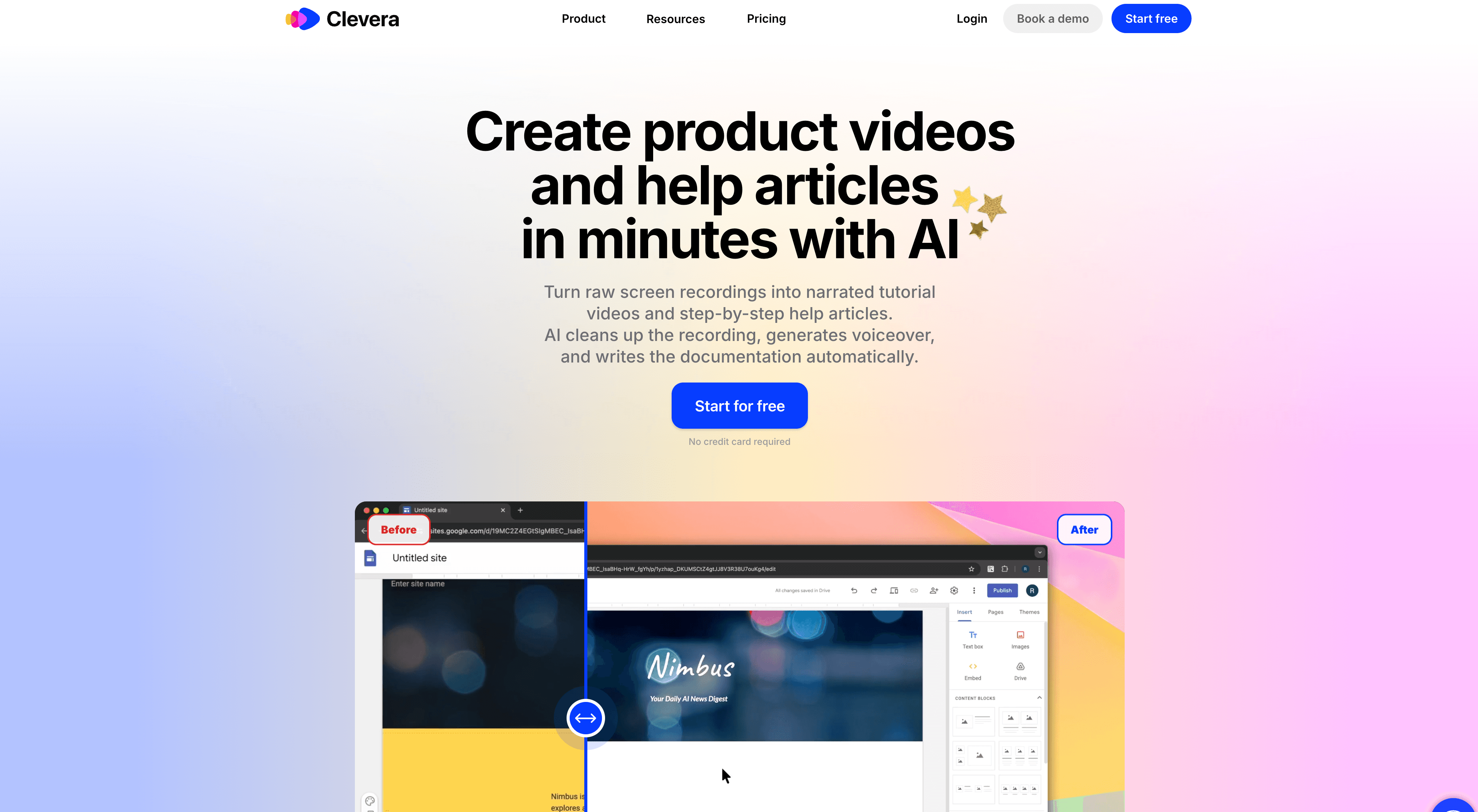
Best for: AI-generated video tutorials and how-to articles that feed your knowledge base
Guru's strength is organizing and surfacing knowledge. Its limitation is that someone still has to create the knowledge — and creating clear, accurate documentation for 40 product workflows or support processes takes real time.
Clevera removes the production bottleneck. You record your screen while working through any workflow — silently, without narration or script preparation. Clevera's AI analyzes the recording and generates a complete narration script, a natural AI voiceover, and a structured how-to article with numbered steps, titles, and screenshots. One recording, one video, one article.
For knowledge management teams, this changes the economics of documentation. A CS lead who needs 30 how-to articles for the team knowledge base doesn't need a content writer — they need 30 screen recordings and 20 minutes.
The output integrates naturally with knowledge management workflows:
Articles export directly to Notion, Confluence, Zendesk, Intercom, and GitHub
Live video embeds update everywhere when you edit after publishing (LiveSync) — useful when product UI changes make existing docs stale
74-language translation for both video and article in one click
Pricing starts at $29/month (annual), compared to Guru's $250/month 10-seat minimum
Clevera doesn't replicate Guru's in-context surfacing of knowledge inside other tools (Slack, CRM, email). If that contextual retrieval layer is central to how your team accesses knowledge during work, you'll want to keep it. But for teams whose main challenge is getting content into the knowledge base in the first place, Clevera addresses the upstream problem.
Best for: CS, support, and operations teams that need to build and maintain a knowledge base of video tutorials and written documentation without dedicated content production resources.
See how Clevera generates help center content automatically
2. Notion
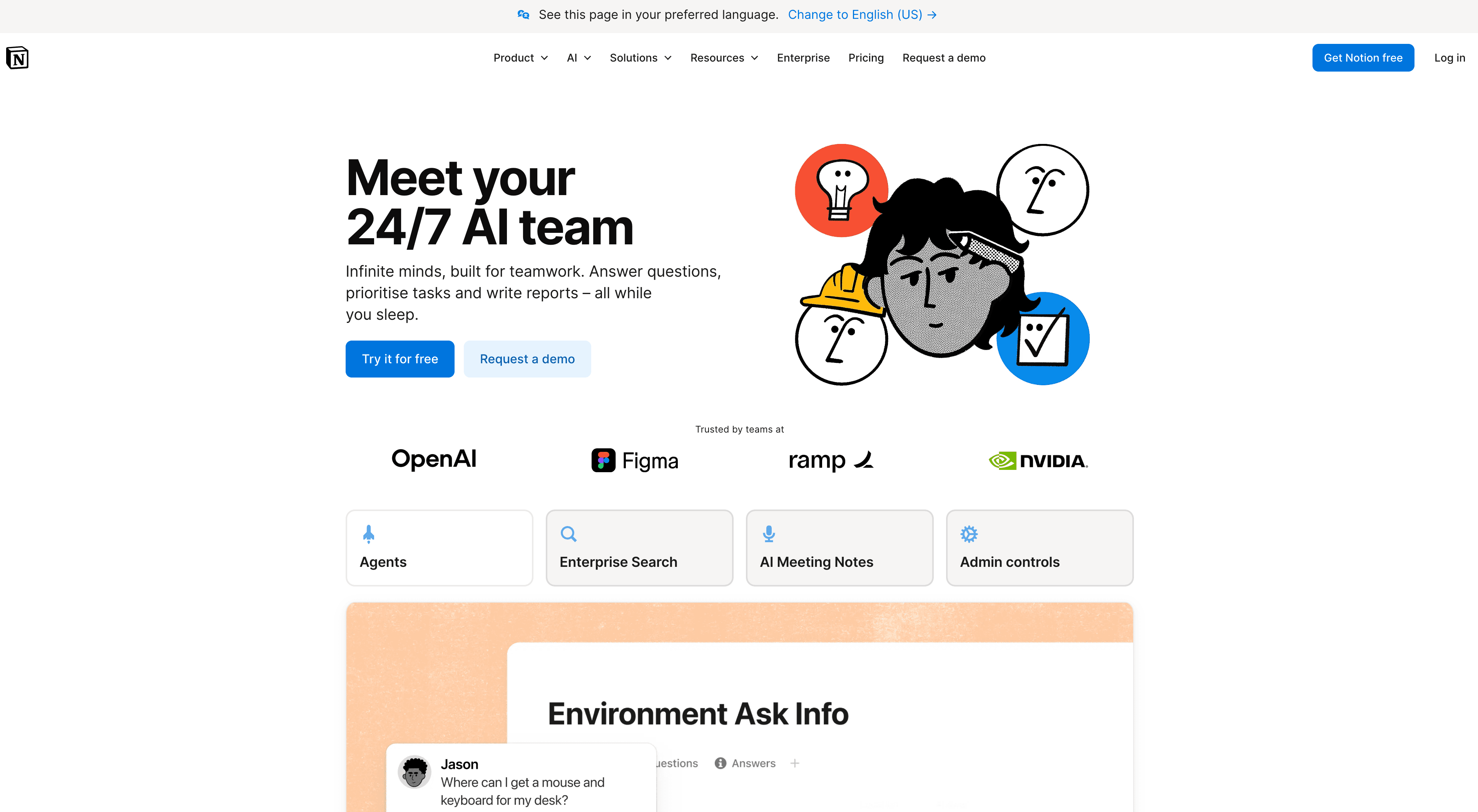
Best for: flexible team wiki and knowledge base without per-seat documentation platform costs
Notion is the most common Guru alternative for teams that want a flexible shared knowledge base without a dedicated platform. Team members create and organize pages, and search (including AI search on paid plans) surfaces content across the workspace.
The gap compared to Guru is contextual surfacing: Notion doesn't embed into Slack or CRMs to surface knowledge during active work the way Guru does. For teams that primarily access documentation by searching directly rather than through contextual prompts, that gap often doesn't matter.
Best for: Teams that want a flexible shared knowledge base and wiki without per-seat documentation platform pricing.
3. Tettra
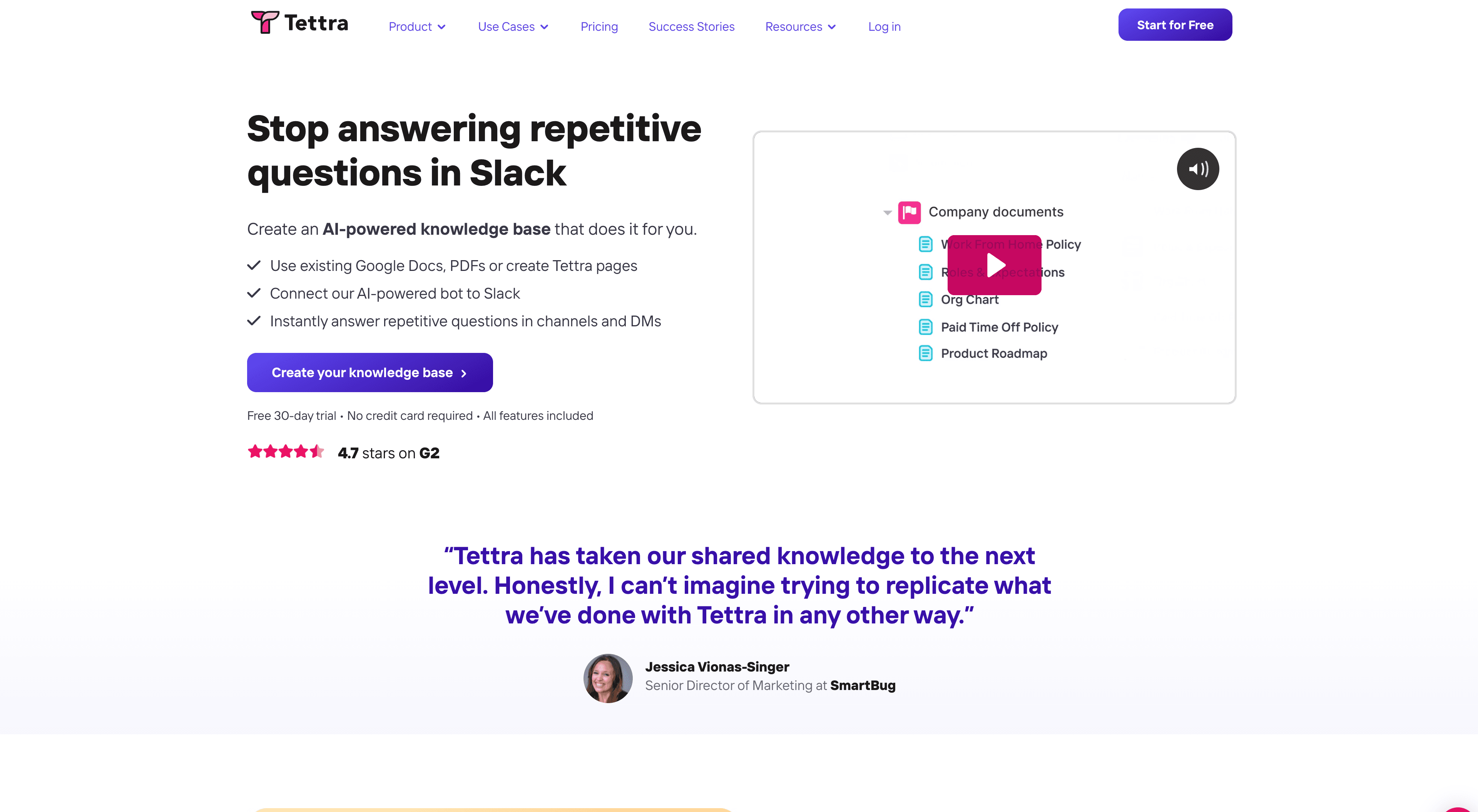
Best for: simple team wiki with Slack integration and Q&A layer
Tettra is a lightweight knowledge base built around Slack. Teammates ask questions in Slack, get pointed to existing documentation or prompted to create new content when no answer exists. The workflow is designed to keep the knowledge base current by tying its growth to actual team questions.
Guru's feature depth is greater — more integration options, better analytics, AI search that works across more contexts. But Tettra's simplicity and Slack-native workflow can be a better fit for small teams that don't need the full Guru stack.
Best for: Small, Slack-heavy teams that want a simple knowledge base with question-and-answer workflows.
4. Confluence
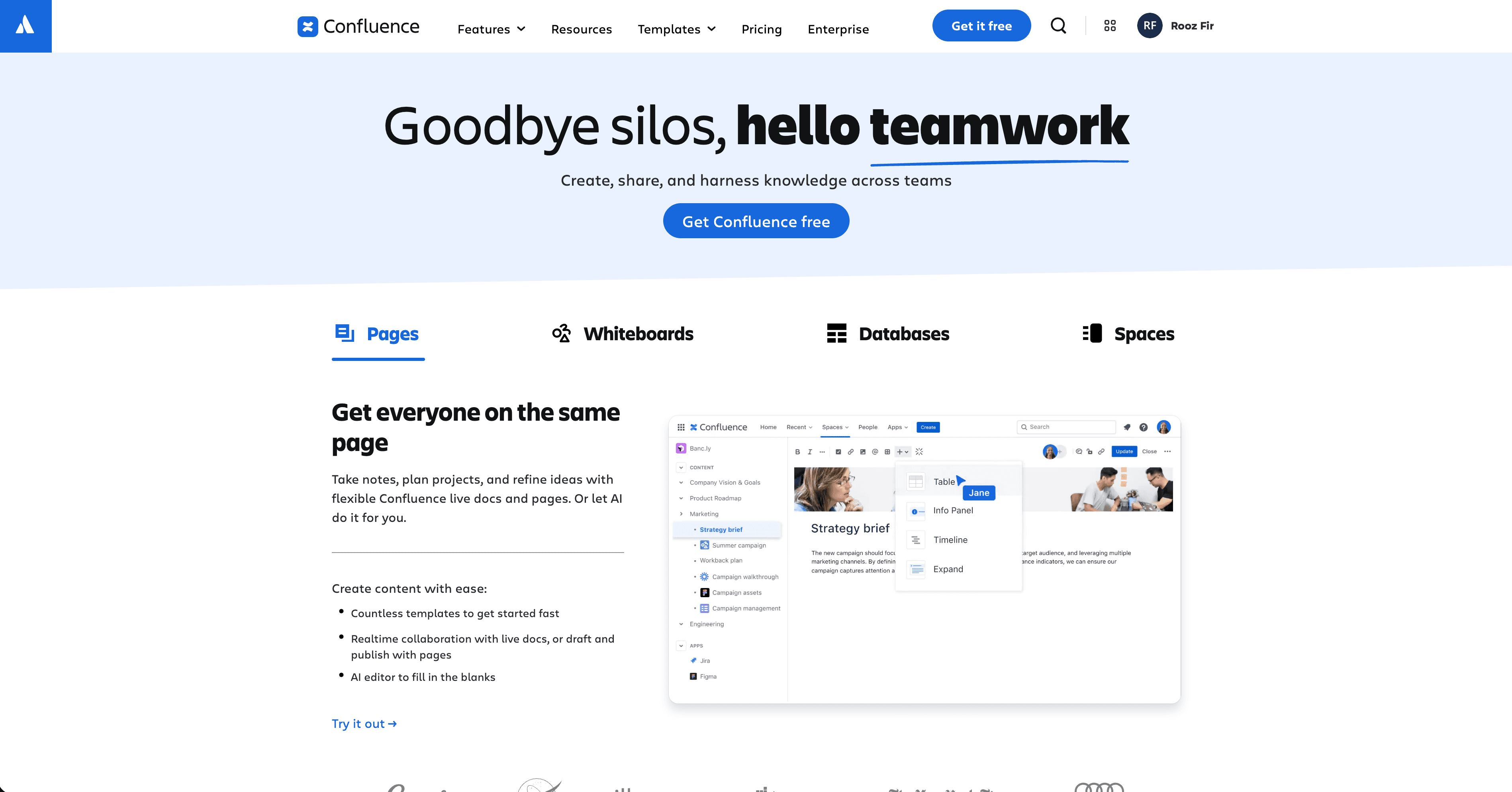
Best for: structured internal documentation within the Atlassian ecosystem
Confluence is the dominant internal documentation and wiki platform for engineering and product teams on Jira. It handles structured documentation with spaces, pages, nested hierarchy, and comment threads.
Compared to Guru, Confluence is stronger for structured technical documentation and weaker for real-time knowledge surfacing in non-Atlassian workflows. For teams already deep in Jira, it's the natural knowledge base choice. For teams in a sales or CS context where Guru's CRM and Slack integrations matter, Confluence is a less natural fit.
Best for: Engineering and product teams already on Atlassian who want structured internal documentation connected to their project management workflow.
5. Helpjuice
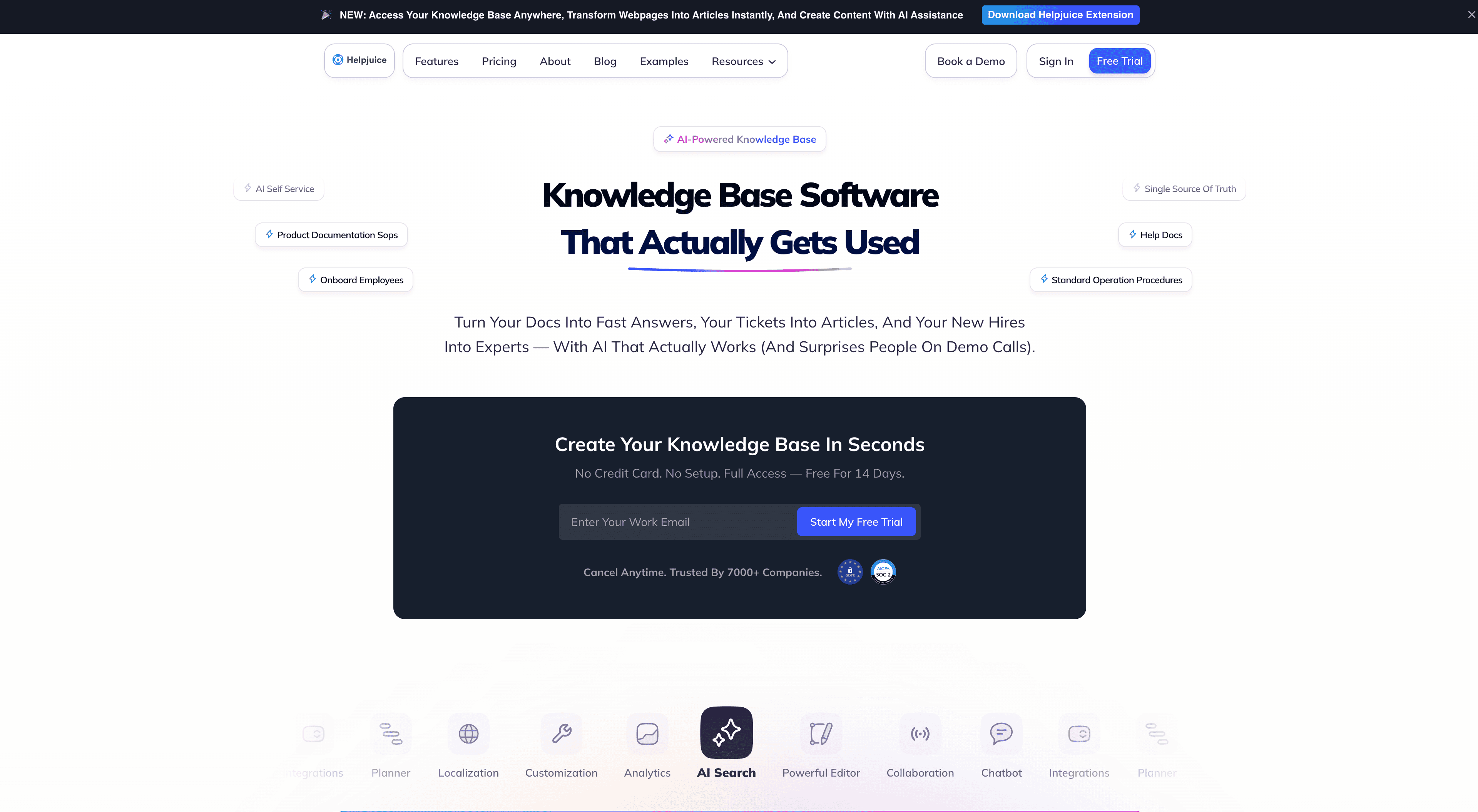
Best for: customer-facing knowledge base with strong search and content analytics
Helpjuice is optimized for external, customer-facing knowledge bases rather than internal team wikis. Strong search (including AI-powered instant answers), analytics tracking what customers search for and fail to find, and a clean public-facing interface distinguish it from Guru's internal-knowledge focus.
For teams using Guru primarily for customer-facing documentation rather than internal knowledge, Helpjuice is a more direct fit. For teams using Guru as an internal team resource, the distinction between internal and external audiences makes Helpjuice less relevant.
Best for: Teams that need a polished, searchable customer-facing knowledge base rather than an internal team wiki.
How to choose
If you need... | Best option |
|---|---|
Automated video + article content creation at scale | Clevera |
Flexible team wiki without per-seat documentation costs | Notion |
Simple Slack-integrated Q&A knowledge base | Tettra |
Structured internal docs in the Atlassian ecosystem | Confluence |
Customer-facing knowledge base with strong search | Helpjuice |
Guru's contextual knowledge surfacing inside Slack and CRMs is its most distinctive feature. For teams that need that real-time retrieval layer, it's hard to match. For teams whose primary challenge is producing enough accurate content to fill the knowledge base, Clevera changes the economics of that problem.