User guide vs user manual: what's the difference and when to use each

The terms "user guide" and "user manual" are used interchangeably so often that most people assume they mean the same thing. They don't — or at least, the distinction matters when you're deciding what to create and what your users actually need.
Understanding the user guide vs user manual difference helps you produce the right documentation for the right audience, avoid building more than necessary, and keep your docs useful as your product changes.
The core distinction
A user manual is a comprehensive reference document. It covers a product's full functionality — every feature, every setting, every possible action — in a structured, complete format. It's meant to be consulted when a user has a specific question, not read cover to cover.
Think of it like a dictionary: not something you read sequentially, but something you search when you need to know what a specific thing does.
A user guide is a task-oriented document. It walks users through specific goals, workflows, or use cases — "how to do X" rather than "here's everything you can do." It's structured around what users are trying to accomplish, not around the product's feature set.
Think of it like a recipe book: organized around outcomes, designed to be followed step by step.
In practice, many documentation teams create both — a comprehensive reference manual for users who want to understand the full product, and targeted guides for common workflows that new users need to complete.
User manual: when to use it
A user manual is the right choice when:
Your product has significant depth: If there are dozens of features, settings, or configuration options, users need a place to look things up. A user manual provides that reference layer.
Your audience includes power users: Advanced users explore the full product. They want to know what's possible, not just what to do first.
Compliance or regulatory requirements apply: In some industries, comprehensive documentation is a legal or contractual requirement. A user manual satisfies that need.
You're documenting a physical product or complex software system: Traditional user manuals are still the standard format for hardware, enterprise software, and technical systems.
A user manual typically covers: feature descriptions, settings and configuration, error codes and troubleshooting, technical specifications, and complete reference for all available functionality.
User guide: when to use it
A user guide is the right choice when:
You want to help new users get started quickly: Onboarding guides, quick start guides, and getting-started walkthroughs are all user guides. They focus on the most important actions, not everything the product can do.
You're solving a specific common workflow: "How to set up your first project" or "how to export data to CSV" — these are user guide topics. They're task-focused and actionable.
Your audience includes non-technical users: User guides use everyday language and focus on what to do, not on what the product does under the hood.
You want users to reach value fast: A 4-page user guide that covers the 3 most important workflows gets used. A 200-page user manual gets downloaded once and never opened.
A user guide typically covers: getting started steps, key workflow walkthroughs, common use cases, and task-specific how-to content.
FAQ: common questions about the user guide vs user manual difference
Do SaaS products need both?
Most SaaS products benefit from both, but the priority depends on the product's complexity. A simple, focused tool probably needs a set of well-written user guides (getting started, common workflows, FAQ) but doesn't need a comprehensive user manual. A complex platform with many features, integrations, and configurations benefits from a reference manual that users can search when they need detailed information.
Which comes first?
Start with user guides. They directly support activation and onboarding — the highest-value documentation a SaaS product can have. Build reference manual content over time as your product matures and your users' questions become more advanced.
What about help center articles?
Help center articles are user guides in a different format — shorter, more specific, and published in a searchable knowledge base. Most SaaS help centers are collections of user guides, organized by topic, not traditional user manuals. The user manual equivalent in a help center is the complete documentation site (like Stripe Docs or Notion's Help Center) that comprehensively covers all functionality.
What format should each take?
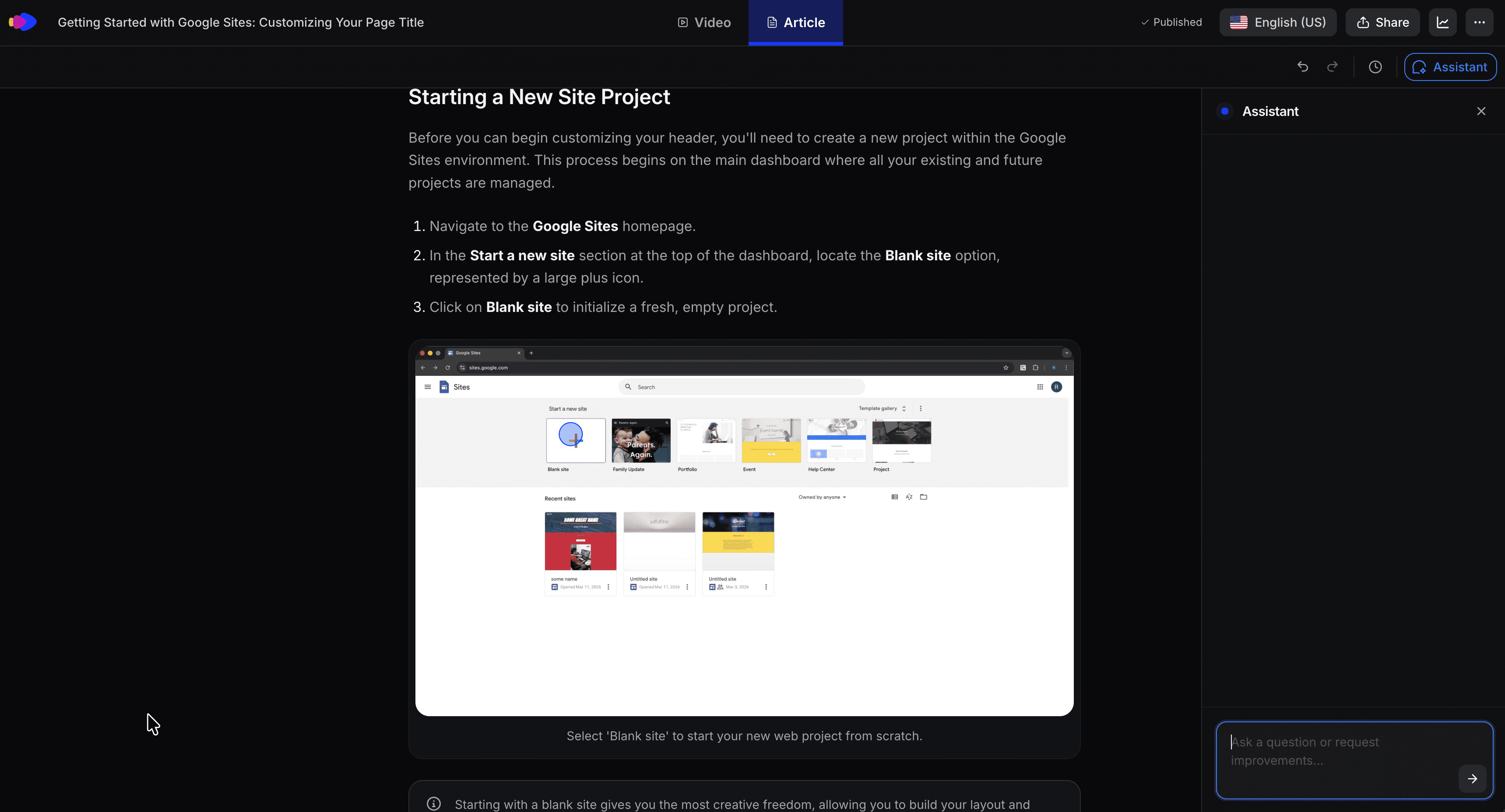
User guides work well in multiple formats: written step-by-step articles, tutorial videos, annotated screenshots, or a combination. The goal is task completion, so use whatever format helps users actually do the thing.
User manuals are almost always written documents — structured reference content that users search and scan rather than read linearly. Detailed tables, definitions, and organized sections work better here than narrative writing.
How does AI documentation change this?
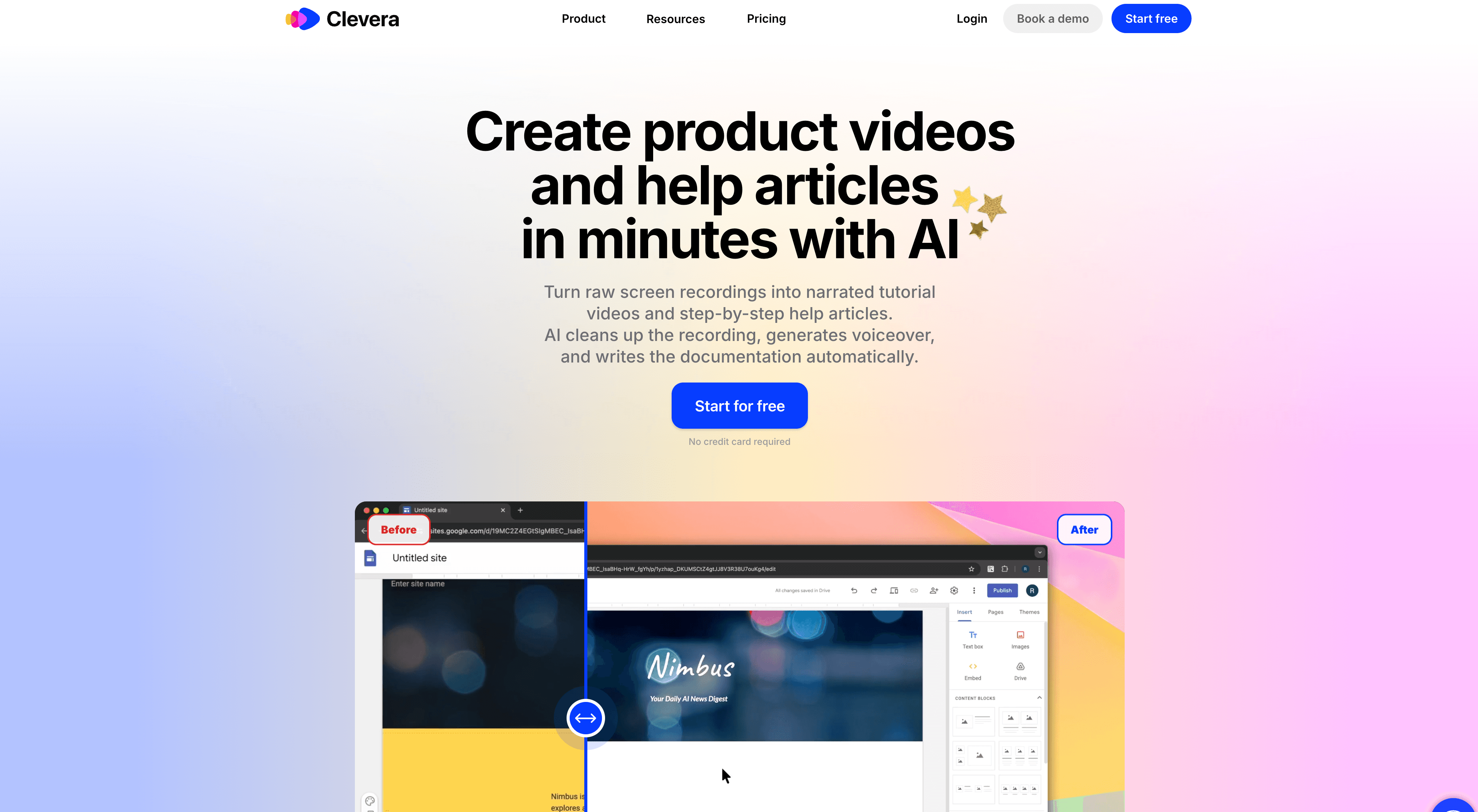
AI documentation tools like Clevera have made it much faster to produce user guide content in particular. You record yourself walking through a workflow, and the AI generates a narrated tutorial video and a written step-by-step guide simultaneously. That's user guide content — task-focused, workflow-based — produced in a fraction of the time it used to take.
User manual content is harder to automate because it requires comprehensively covering a feature's full behavior, edge cases, and technical details — something that requires a human writer with deep product knowledge. But AI can still help by drafting sections, organizing structure, and surfacing gaps.
Key differences at a glance
User guide | User manual | |
|---|---|---|
Purpose | Help users accomplish a task | Document everything a product can do |
Structure | Task-oriented (how to do X) | Feature-oriented (here's what X does) |
Format | Walkthrough, tutorial, step-by-step | Reference document, comprehensive |
Audience | New and intermediate users | All users, especially power users |
Length | Short to medium | Long and comprehensive |
How it's used | Read sequentially to complete a task | Searched to answer a specific question |
Priority | High — start here | Lower — build as product matures |
The practical answer for most teams
If you're a SaaS team deciding where to invest your documentation effort: start with user guides for your most important workflows. Help new users get started, reach activation, and succeed at the tasks they're most likely to need in their first week.
Build reference manual content once you have a clear picture of what your advanced users need — which is usually informed by support tickets, help center search data, and user interviews.
And if you're building both: keep them distinct. A user guide that tries to be a user manual becomes too long to be useful as a guide. A user manual that reads like a guide loses the completeness that makes it valuable as a reference.